Choosing mini dental implants vs traditional implants is one of the most common decisions patients face when replacing missing teeth in Lincolnwood, IL. Both approaches use titanium posts that integrate with bone and support crowns, bridges, or dentures. The differences show up in size, surgical demand, bone requirements, healing time, and overall cost. For many people seeking a gentler path, mini implants offer a practical middle ground between living with gaps or adhesives and undergoing a more extensive surgical process.
Quick answers
How do mini implants differ in size?Mini implants are typically under 3 mm wide, while traditional implants often average about 5 mm in clinical use.
Do mini implants need as much bone?Usually no. Their smaller diameter often means less bone is required, and grafting is frequently avoided.
Which option heals faster?Mini implants are generally less invasive and often reach usable stability in weeks rather than months.
Are mini implants less expensive?In most comparable cases, yes, because the procedure is simpler and involves fewer surgical steps and components.
Size and Design: Why Diameter Changes Everything
Traditional dental implants are usually wider than 3 mm and frequently around 5 mm in practice. Placing them often involves opening the gum, accessing the bone, and using a sequence of progressively larger drills. That creates a strong foundation, but it also places more demand on the jaw and the healing response.
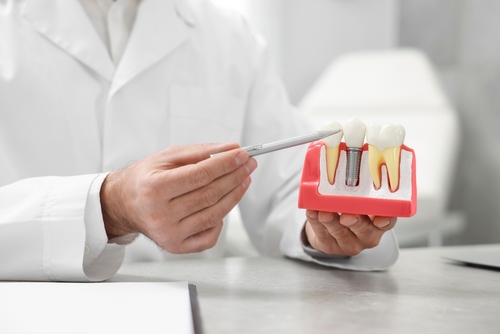
Mini implants, by contrast, are typically less than 3 mm wide. At Raymond G. Hatland, DDS, they are placed through a small pilot pathway with a minimally invasive technique. The design is also different. Traditional systems are often multi-piece, with components assembled over several visits. Mini implants are commonly a single piece of biocompatible titanium, which can streamline placement and restoration.
Dr. Hatland describes the clinical difference this way on the practice’s mini dental implants page: instead of cutting and progressively enlarging the site, he can place a mini implant through a small pilot hole made directly through the gum tissue. Less disruption to bone and soft tissue is the goal.
Bone Needs and Grafting
Bone volume is often the deciding factor in traditional implant planning. If the ridge is narrow or has resorbed after years of tooth loss, grafting may be recommended before a conventional implant can be placed. Grafting can be effective, but it also adds appointments, healing time, cost, and surgical burden.
Because mini implants need less bone width, many patients who were told they lack bone for traditional implants may still be candidates. That does not mean every case is automatic. Careful imaging and examination still matter. It does mean the conversation can shift from “implants are impossible” to “a smaller, more conservative implant may work.”
This fits the practice’s biological focus: conserve tissue when possible, use body-friendly materials, and choose the least invasive option that still delivers stable function.
Invasiveness and Comfort
Mayo Clinic’s overview of dental implant surgery describes conventional implants as posts surgically placed in the jaw to support replacement teeth. That remains an excellent solution for many people. Mini implant care simply aims to achieve similar goals with less soft-tissue trauma in suitable cases.
Patients often ask about pain. In a practice video, Dr. Hatland puts it plainly:
“Because this is a non-surgical placement method, post-operative discomfort is minimal to nearly zero. At most, you might take an aspirin. The procedure is highly patient-friendly and easy on the body.”
You can read more in Are Mini Dental Implants Painful?. Comfort expectations still vary by person, number of implants, and overall health. Local anesthetic is used during placement, and aftercare is reviewed carefully.
Healing Time and Treatment Timeline
Traditional implant cases often involve months of healing before a final crown or denture is fully loaded. Mini implant timelines are usually shorter.
Dr. Hatland explains:
“With traditional implants, the process can take four to six months. With mini implants, it’s typically only three to six weeks, depending on the individual case. Mini implants are nonsurgical, meaning we don’t expose or reshape the bone in most situations. In about 99% of cases, the implant is placed directly with minimal trauma, and it begins with roughly 50% integration from the start.”
That early stability is why temporary restorations can frequently be attached the same day. You leave with improved appearance and function while final restorations are prepared. Details on sequencing are covered in How Long Does the Mini Dental Implant Process Take?.
Cost Considerations Without Hard-Sell Pricing
Mini implants are often significantly less expensive than traditional implant cases for comparable needs. Reasons include fewer surgical stages, less need for grafting in many situations, a simpler one-piece design, and fewer visits overall.
Exact fees still depend on how many implants you need and whether they support a single crown, a bridge, or an implant denture. A free consultation is the honest way to compare options for your mouth rather than relying on generic averages.
Holistic Framing: Working With the Body
Dr. Hatland’s philosophy is conservative and whole-health oriented. Oral problems are not viewed in isolation from nutrition, stress, healing capacity, and material compatibility. Titanium mini implants are biocompatible and designed to integrate with living bone. The smaller diameter and gentler placement technique are intended to reduce trauma so the body can recover with less strain.
That does not mean mini implants are “better” for every person in every situation. Traditional implants remain appropriate when anatomy, bite forces, or restorative design call for a wider platform. The right choice is the one that fits your bone, health history, and long-term goals with the least unnecessary risk.
The ADA’s MouthHealthy resource on implants emphasizes discussing options carefully with your dentist and notes that general health often matters more than age. That same careful discussion is the foundation of care here.
When Mini Implants Are Often Considered
Mini implants are frequently discussed for patients who:
- Are missing one tooth, several teeth, or a full arch
- Want a less invasive alternative to conventional implant surgery
- Have been told they may not have enough bone for traditional implants
- Prefer a shorter treatment timeline when clinically appropriate
- Need denture stabilization with snap-in or more fixed options
- Value biocompatible materials and conservative technique
They may also support implant denture designs ranging from removable snap-ons to non-removable roundhouse bridges.
Soft Next Step: Free Implant Consultation
If you are weighing mini dental implants vs traditional implants, start with clarity rather than pressure. A free implant consultation includes necessary X-rays, a customized plan, and a full cost outline so you can decide with confidence.
Call (773) 338-4440, visit 6453 Lincoln Ave, Lincolnwood, IL 60712, or request an appointment. Bring your questions about bone, healing, and cost. Dr. Hatland’s goal is a stable smile that respects both oral function and the body’s capacity to heal.