
Dental Bridge in Lincolnwood, IL
A bridge is a structure that connects two pieces of land. These structural marvels span rivers, lakes, and even highways, making travel from one place to another easier! Historically, bridges were a way to allow the trade of goods and ideas between communities. Now, bridges have become just another part of the road, sidewalk, or railway people take on their way to work. A dental bridge is similar in concept, but instead of connecting land, it connects your smile! When a tooth is missing, a dental bridge spans the gap by anchoring a replacement tooth, often using the healthy teeth on either side for support. This restoration keeps your smile aesthetically pleasing and functional.
For patients in Lincolnwood, IL, Dr. Hatland offers both traditional and implant-supported dental bridges to restore your smile.
What Is a Dental Bridge?
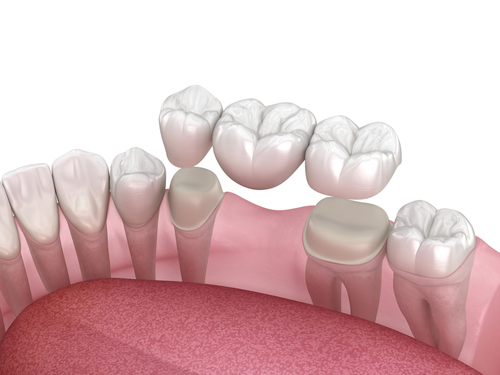 A dental bridge is a restoration that replaces one or more missing teeth. Using either your remaining teeth for support or dental implants, bridges help fill the gaps in your smile with artificial teeth called pontics! These restorations look like natural teeth and are crafted from a durable material that can withstand the pressure of chewing.
To learn which dental bridge is the right option for you, you’ll need to visit Dr. Hatland in Lincolnwood, IL. During your initial consultation, he will assess your smile and determine which solution best benefits you.
Exploring the Dental Bridges Dr. Hatland Offers
Dr. Hatland provides a range of dental bridge options to meet everyone’s needs, such as:
- Traditional bridge: When 1-3 teeth are missing, Dr. Hatland can use a traditional bridge. This restoration includes tooth-shaped pontics in the middle, connected to dental crowns on both sides. These crowns then cover the teeth on either side of the gap to anchor your bridge in place! However, your adjacent teeth must be healthy enough to support a dental crown.
- Cantilever bridge: If you have only one tooth healthy enough to support a dental crown, he may use a cantilever bridge. This structure resembles how a balcony attaches to a building; a pontic attached to one crown, which is then secured to a single tooth for support. The drawback to this method is that a cantilever bridge can only replace one missing tooth at a time.
- Maryland bridge: For those who don’t want to alter their healthy teeth to support dental crowns, Dr. Hatland offers a Maryland bridge. This structure uses porcelain or metal wings instead of dental crowns, which attach to the back of your remaining teeth. While a Maryland bridge is stable, it’s best for replacing front teeth, as your back teeth require a stronger support system.
- Implant bridge: For the strongest and most durable solution, Dr. Hatland provides implant-supported bridges! These restorations replace your missing teeth while relying on dental implants for support, rather than using your remaining teeth.
Why Use Dental Implants To Secure a Bridge?
Dr. Hatland is a holistic dentist, meaning that he doesn’t just treat your smile, but your whole body. He believes that taking care of your overall health is a great way to support your oral health, as the two are intertwined!
One way he ensures your dental care benefits your body is by using natural, biocompatible materials. For example, dental implants are titanium screws that Dr. Hatland embeds in your jawbone to support replacement teeth.
Titanium is not only safe for the body, but it also interacts well with living bone, allowing the metal to integrate with your bone over time. Once secure in your jaw, these implants help keep your jawbone healthy and anchor restorations like a dental bridge in place.
Unfortunately, not all titanium implants are the same. Some implants, despite being made of titanium, still cause damage during placement.
Conventional dental implants have a large diameter that requires a relatively invasive procedure. To fit the implant in your jaw, a dentist would have to make an incision in your gums and create a hole in your jawbone with a series of large drills. This complex placement process involves a difficult healing period, especially for frail patients or those who are immunocompromised.
Fortunately, Dr. Hatland uses a smaller, less invasive alternative!
Introducing: Mini Dental Implants
Mini dental implants are about half the size of conventional implants.
Thanks to their size difference, mini implants require less jawbone for support and a less invasive procedure. Rather than making an incision, Dr. Hatland simply drills a small pilot hole through your gums and into your jawbone. Then, once in your jaw, the titanium implants will immediately begin to stabilize!
This simple procedure offers patients like you a whole host of benefits, including:
-

Mini implants use a minimally invasive procedure to secure dental bridge restorations, replacing multiple missing teeth. Fewer appointments: Unlike conventional implants, mini implants are one-piece implants that require only one placement appointment.
- Faster healing: Because of their minimally invasive procedure, mini implants require less healing than conventional implants. Rather than waiting months before securing a final restoration, Dr. Hatland can place a permanent dental bridge on your implants in just a few weeks.
- More affordable: With fewer appointments and components to pay for, mini implants are a much more affordable solution to tooth loss than conventional implants.
In just one appointment, Dr. Hatland places your mini implants, anchors a temporary dental bridge, and restores your smile. Then in a few weeks, you’ll have your permanent restoration to enjoy for years to come.
Restore Your Smile in Lincolnwood, IL, With Dr. Hatland!
When you have multiple missing teeth, a dental bridge is a great way to restore your smile. Like a structural bridge, a dental bridge helps “bridge” the gaps in your smile and connect your remaining teeth. Depending on your needs, there are various restorations to choose from. However, Dr. Hatland recommends a mini implant-supported bridge for the best stability and function!
Book your initial consultation today (free for mini implants!) and discover which dental bridge best suits your needs.
Frequently Asked Questions
The cost of a dental bridge depends on how many teeth you’re replacing and which restoration you choose.
A traditional dental bridge is typically more affordable than an implant-supported bridge because titanium is a high-quality material. Additionally, replacing five teeth in a row is generally more expensive than replacing two missing teeth!
To learn about the cost of your bridge restoration, come in for a consultation. During this appointment, Dr. Hatland will discuss pricing and help determine what your insurance will cover.
However, it’s important to note that many insurance companies won’t cover dental implants. Fortunately, Dr. Hatland partners with third-party financing companies that help split your costs into manageable monthly payments!
Dental bridges are permanent restorations, meaning they are not removable. Whether you need an implant bridge or a traditional bridge, this restoration is permanently cemented in place.
If your dental bridge falls out or breaks, visit Dr. Hatland as soon as possible for an emergency appointment! He will get you in when he can and restore your restoration to keep your smile happy and healthy.
As with all dental care at his office, Dr. Hatland makes your comfort a priority.
Before beginning your bridge process, whether using implants or not, he will use a local anesthetic to numb your smile.
If you do need dental implants, Dr. Hatland uses minimally invasive placement procedures that minimize disruption to your gum and bone tissue.
Not only does this gentle process allow for faster healing, but it also allows for a more comfortable recovery period! Any discomfort you do feel is easily managed with over-the-counter pain medications.